Authored by artist Pip Lewis
Magical Wings - creating layered artworks with artist Pip Lewis
Outline
- Overview
- Pattern sheet
- Photo lottery
- Tracing outline
- Adding patterns
- Adding detail
- Naming the species
0. Overview
This guide describes the processes involved in creating layered artworks using acetate and paper, drawing and marker art techniques.
The art process were designed to explore and learn about the range of pattern, line and colour found on the wings of specific Butterflies and Moths species living in Oak Tree - and the function this has on their survival.
1. Pattern sheet
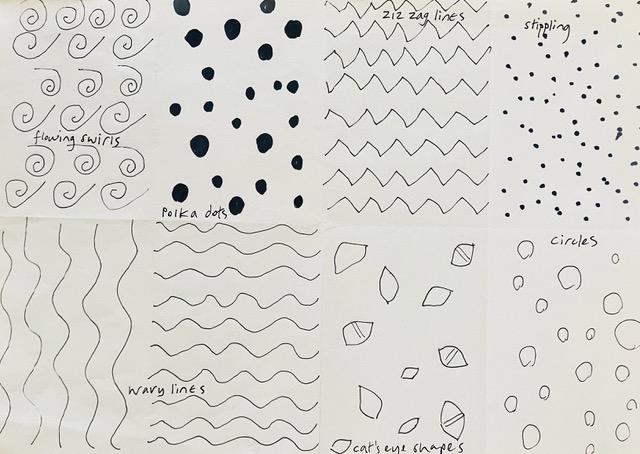
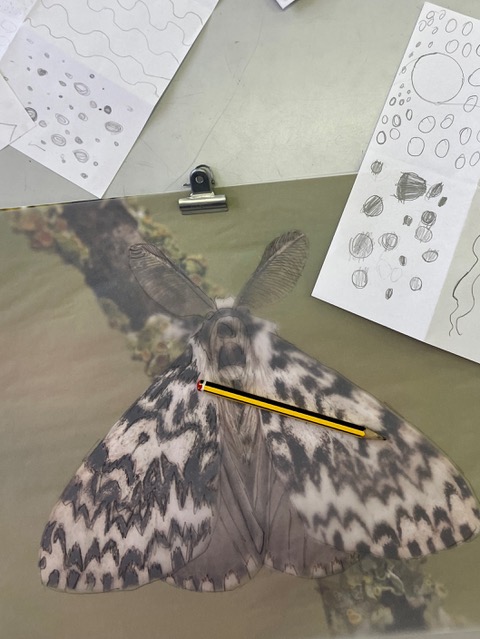
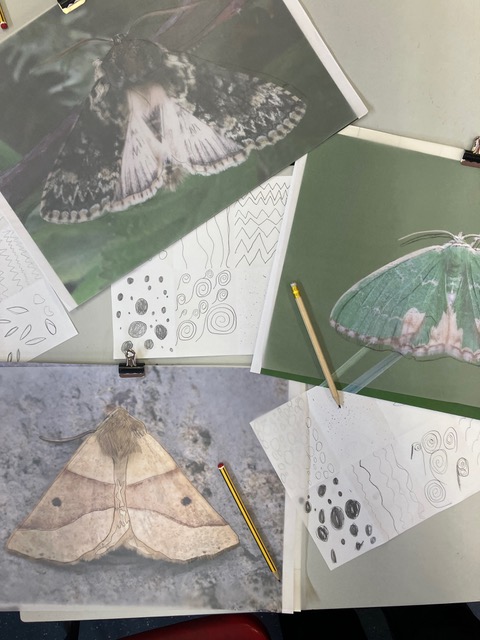
In the first exercise the pupils made a pattern sheet , with seven of the most common patterns and shapes found on butterfly and moth’s wings.
2. Photo lottery
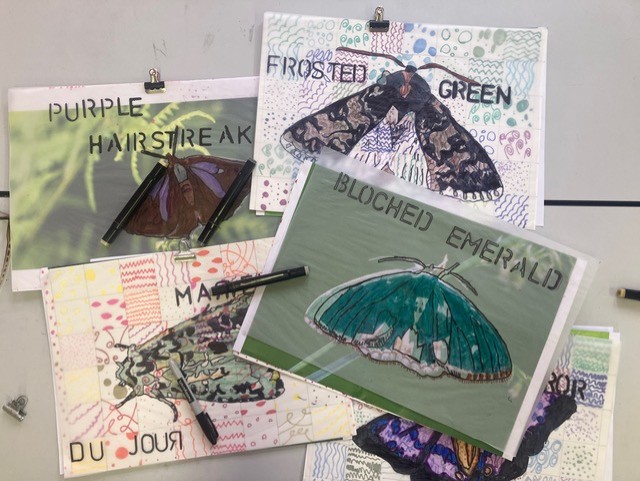
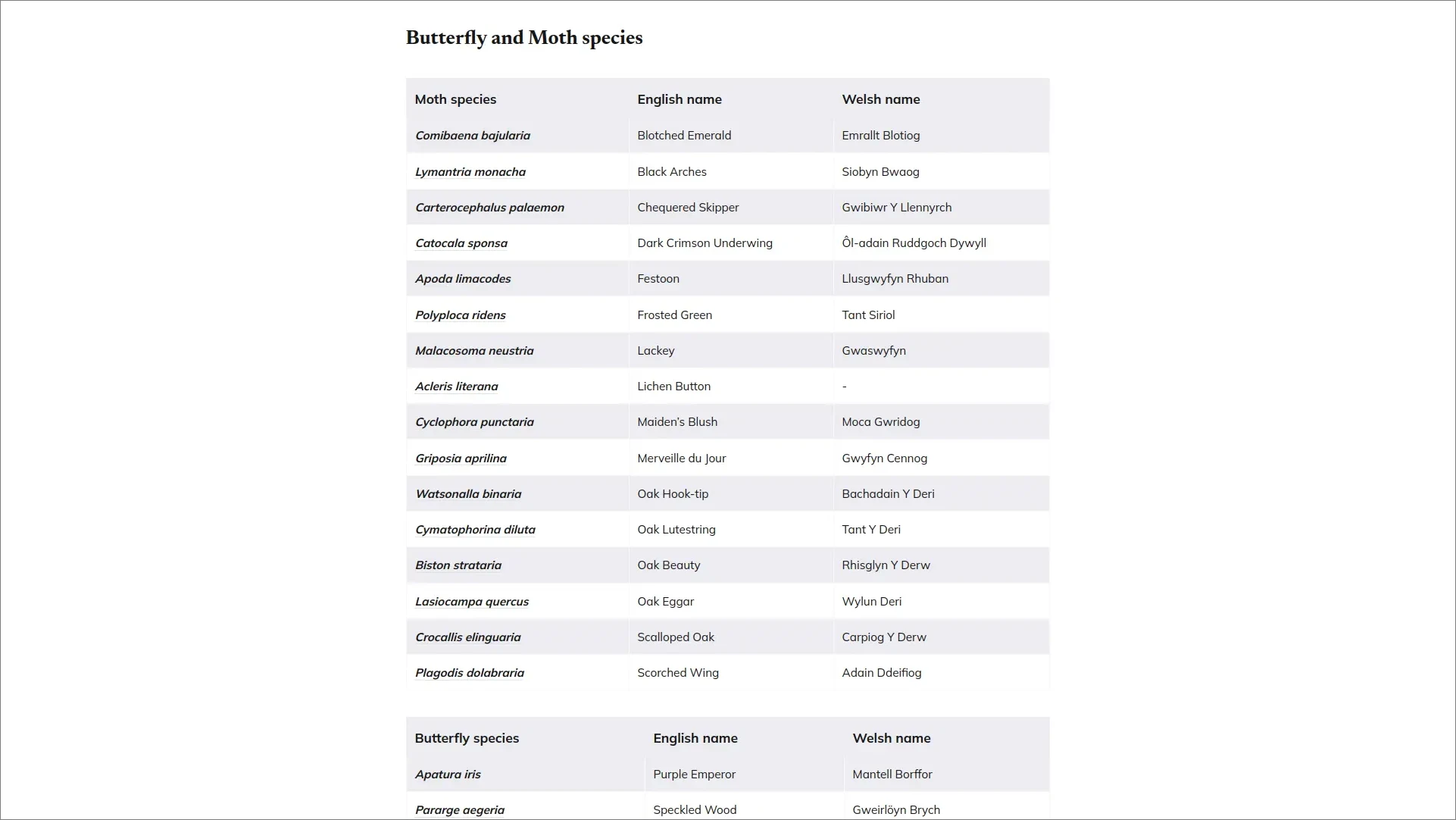
We did a photo lottery - where each pupil randomly selected a number hidden in a bag - which identified a specific A3 photo of a species of butterfly or moth whose habitat is the oak tree, which they would use as the basis of their artwork.
 List of butterfly & moth species that inhabit the Oak
3. Tracing outline
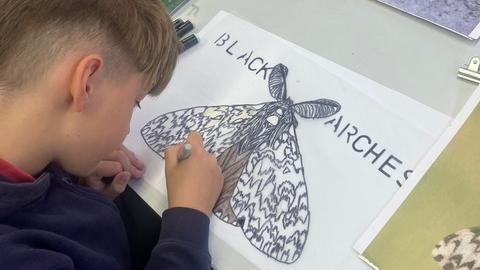
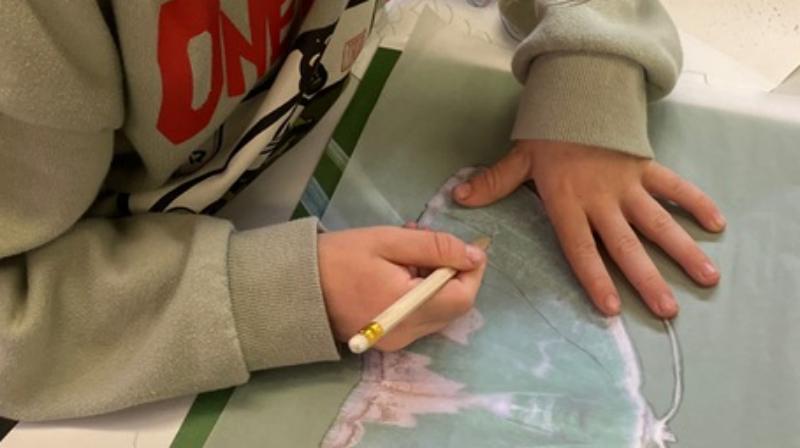
A sheet of tracing paper was attached with a clip over the photograph and everyone drew the outline of the butterfly or moth onto the tracing paper, and added all the details like the veins and pattern shapes, using a sharp pencil first and then going over theses lines with a permanent black marker.
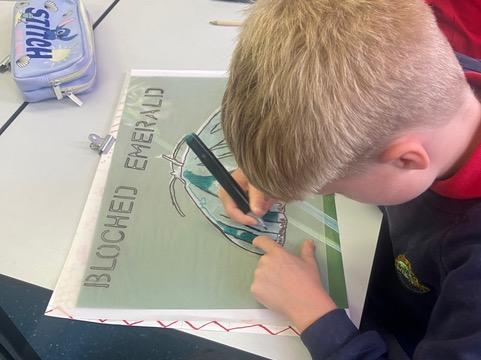
 Student tracing the Blotched Emerald moth outline
4. Adding patterns
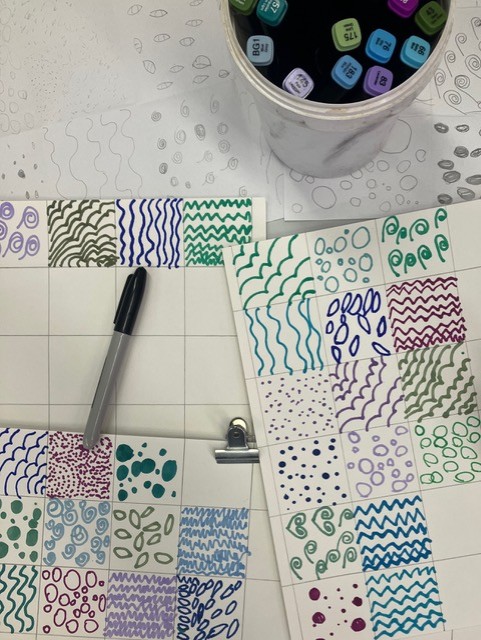
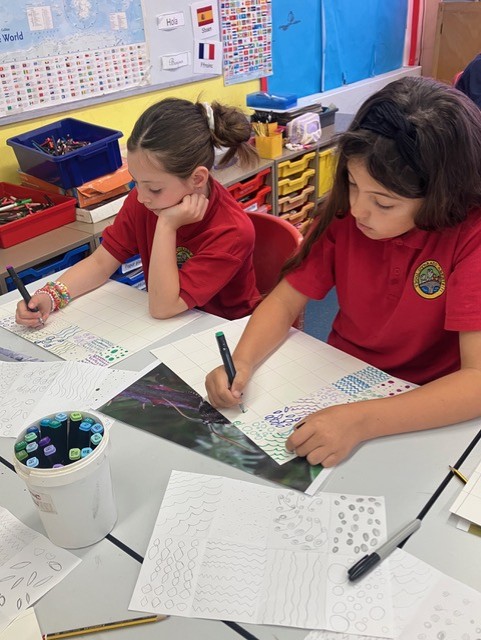
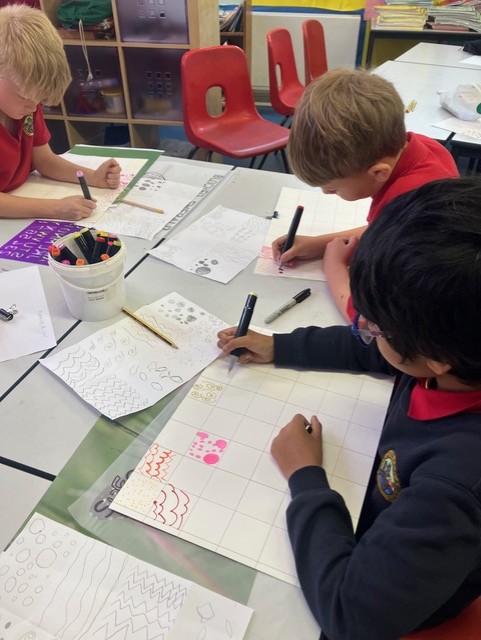
- To create the background each pupil was given an A3 piece of cartridge paper, pre-prepared with a pre prepared pencil grid of 48 squares.
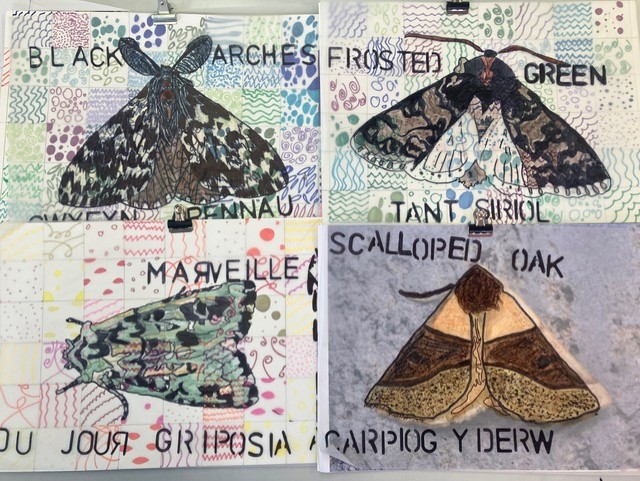
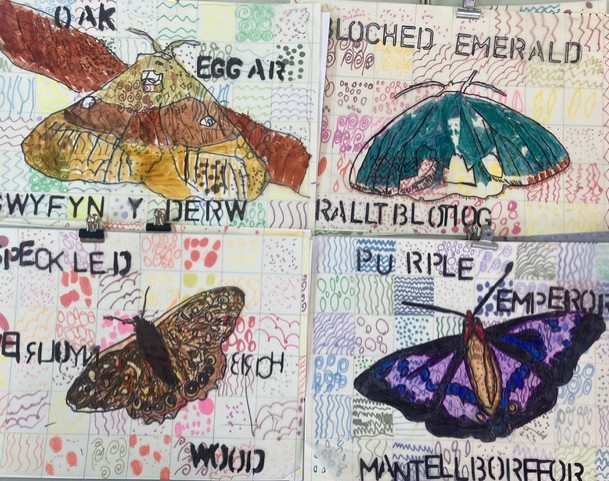
- The pupils selected and added alternate patterns and colours from the individual pattern sheet they had created, with colour markers.
- Half of the group worked with warm colours - reds, oranges, yellows - and the other half used cool colours - blues, greens, and purples.
5. Adding detail
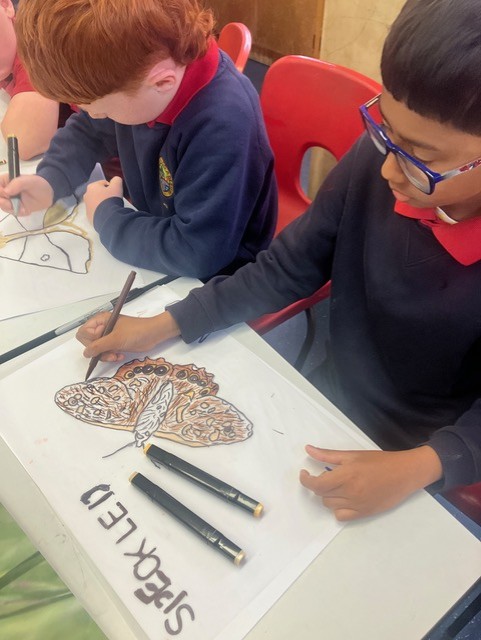
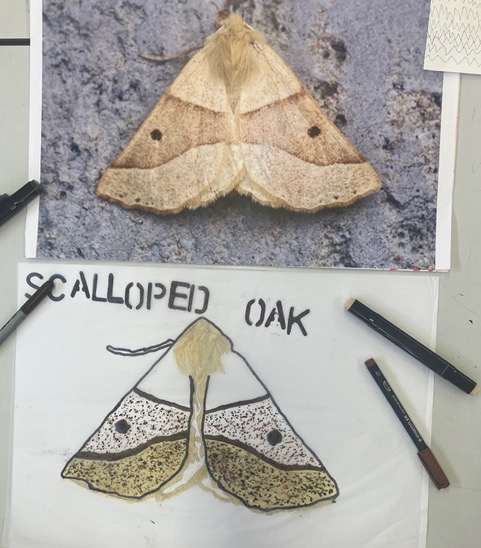
The students completing the patterns and used colour markers on the tracing of the butterfly or moth species, to add the detail patterns and shape they have on their wings.
6. Naming the species
The name of the species of butterfly or moth were added at the end — in Welsh and English — to the final image, using a letter stencil and focusing on composition and layout of the overall design.